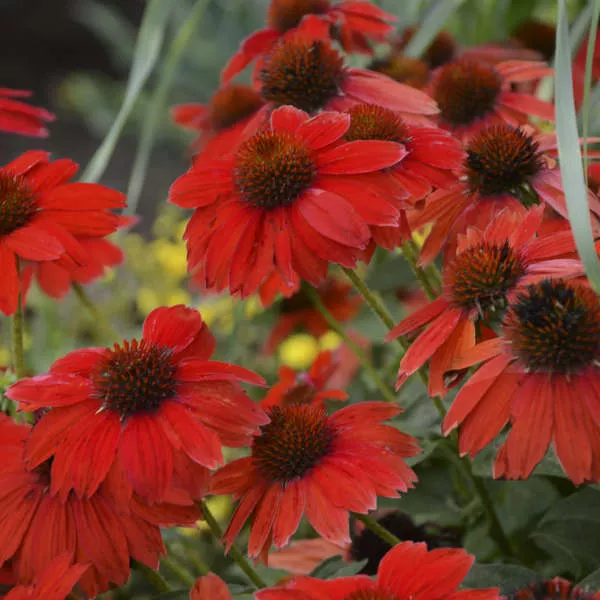
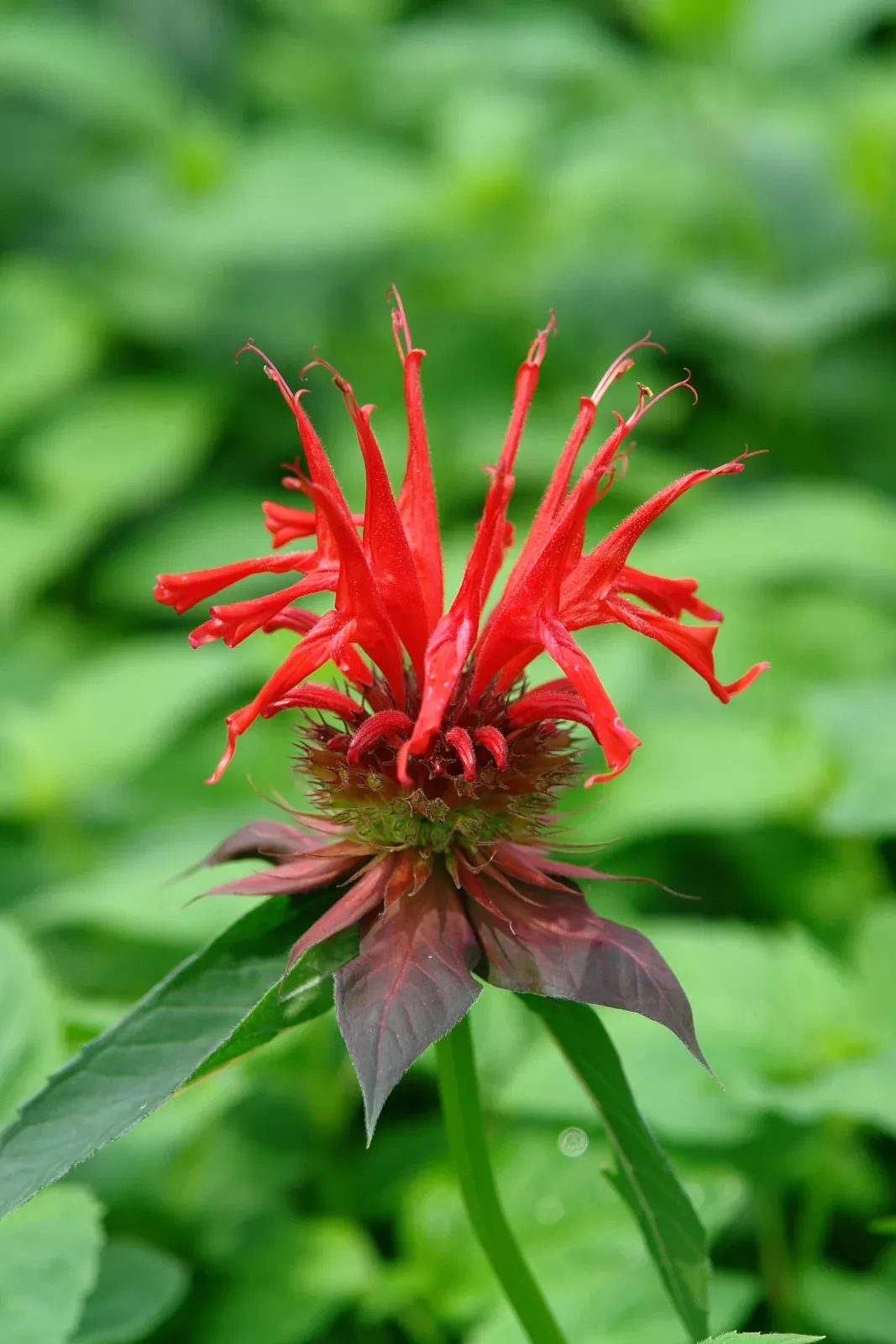
A well-loved variety of the native bee balm. Fragrant leaves topped with large, deep scarlet-red blooms. Divide spring or fall every 3 – 4 years. Foliage can be cut back after flowering to encourage new leaves and possible rebloom. Beebalm flowers are attractive to bees, butterflies, and hummingbirds.3 – 4′ Botanical Name- Monarda didyma Jacob Cline Pronunciation- moh-NAR-duh dih-DY-muh Foliage- Deciduous Mature Width- Mature Height- Sun Exposure- Full sun to part sun Soil Preferences- Average, evenly moist, well drained Current Size- 1 Bloom Color- Red Bloom Time- Mid summer Companion Plants- Blazing Star – hot red vs purple spires, hummingbird haven Fauna Attracted- Bees, hummingbirds, butterflies (including Monarchs for nectar) Plant Habit- Perennial
- Care Rating- Easy
Default Beavercreek Nursery Bin – PP51B Yearly Care Instructions- Deadhead to encourage rebloom; thin out in spring to improve air circulation. Trimming Instructions- Deadhead during blooming to prolong flowers. Cut back in late fall to prevent disease. Fertilization Instructions- Apply a balanced fertilizer (e.g., 14-14-14) in spring; moderate feeding need. Compost in clay soil helps retain moisture but avoid overwatering. Fertilizer Recommendation- Flower-tone Possible Issues- Powdery mildew, rust